


The Archaeological Discovery That Launched a Thousand Togas: Picture this: it’s the mid-1700s, and Europe is drowning in Rococo excess with its pastel pinks, gilded cherubs, and furniture so ornate it probably needed its own maintenance staff. Then archaeologists started digging up Pompeii and Herculaneum, and suddenly everyone collectively decided that all that frilly nonsense had to go.

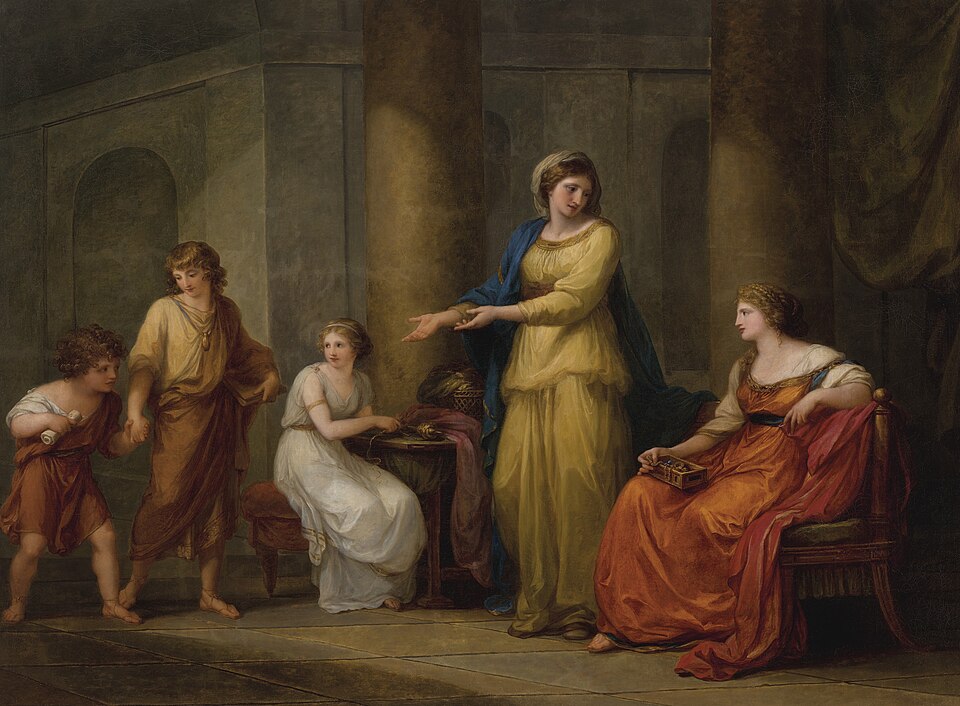
Neoclassicism emerged as the artistic equivalent of a palate cleanser, a return to the supposed rational simplicity and moral virtue of ancient Greece and Rome. Artists looked at crumbling marble statues and ruins and said, “This. This is what art should be.” Never mind that those white marble statues were originally painted in garish colors. The fantasy of noble restraint was too appealing to fact-check.

Jacques-Louis David and the Art of Revolutionary Propaganda
If Neoclassicism had a poster child, it would be Jacques-Louis David, the French painter who turned ancient history into political commentary so effective that it helped fuel a revolution. His painting “Oath of the Horatii” depicted three Roman brothers pledging to fight to the death for their country, which was basically 18th-century France’s version of a motivational poster about civic duty and sacrifice.

David painted with razor-sharp clarity, heroic poses, and theatrical lighting, making everything look like the world’s most important stage production. He went from painting for the monarchy to becoming Napoleon’s official propagandist, proving that if you’re good at painting people looking noble and determined, you’ll always have work regardless of who’s in charge.

“The only way for us to become great, yes, inimitable, if it is possible, is the imitation of the Greeks.”
— Johann Joachim Winckelmann
When Architecture Got Seriously Column-Happy
Neoclassicism wasn’t just about painting. Architecture went absolutely wild for anything Greek or Roman, slapping columns, pediments, and domes on everything from government buildings to banks to rich people’s houses. The U.S. Capitol? Neoclassical. The British Museum? Neoclassical. That fancy building in your city that looks like a Greek temple but is actually a courthouse? Definitely Neoclassical.

The movement’s architects believed that the rational, orderly principles of classical architecture could bring order to society itself. It’s the architectural equivalent of thinking buying the right planner will finally make you organized. Spoiler: it doesn’t work that way, but the buildings sure look impressive.

“The artist must be a philosopher and have no other guide except the torch of reason.”
— Jacques-Louis David

The Movement That Refused to Die (Seriously, It’s Still Here)
Here’s the wild part: Neoclassicism never really ended. While other art movements came and went like fashion trends, Neoclassical principles keep resurfacing whenever society wants to project authority, stability, or timeless values. Is every government building trying to look serious and trustworthy? That’s Neoclassicism. Contemporary artists referencing classical mythology or sculpture? Neoclassicism’s grandchildren. The aesthetic shows up in everything from perfume ads to sci-fi movies, proving that humans will apparently never tire of pretending we’re as cool as ancient Romans.

Channel Your Inner Ancient Greek (Toga Optional)
Ready to appreciate Neoclassicism’s enduring appeal? Visit museums like the Louvre, the Met, or the National Gallery to see David’s heroic canvases and Antonio Canova’s pristine marble sculptures in person. Walk around your city and count how many Neoclassical buildings you can spot. Read about the Enlightenment thinkers who believed reason and classical learning could perfect society.
Whether you’re drawn to the movement’s clarity and restraint or appreciate buildings with really good columns, Neoclassicism offers a masterclass in how the past constantly reshapes the present. Just remember: those white marble statues were originally painted bright colors, and ancient Greece was a lot messier than the Neoclassicists wanted to admit.
Looking to explore more art genres? Head over to Joe Latimer.com for a multidisciplinary, visually stunning experience. ☮️♥️🎨
Enjoy this blog? Please help spread the word via: