


Picture this…
Speed, Violence, and Really Questionable Manifestos: it’s 1909, and a bunch of Italian artists are so obsessed with cars, trains, and industrialization that they literally write a manifesto declaring they want to destroy museums, libraries, and anything that smells remotely like the past. This is Futurism, the art movement that looked at the 20th century’s rapid technological changes and said: “Let’s make this our entire personality.”
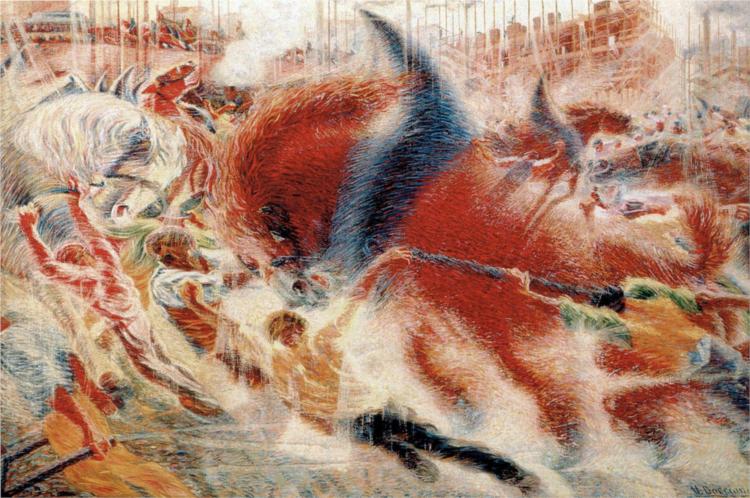
Led by the perpetually caffeinated poet Filippo Tommaso Marinetti, the Futurists were convinced that speed was beautiful, war was cool (it’s absolutely not), and standing still was basically a crime against humanity. They painted motion, energy, and machinery with the kind of fervor most people reserve for their first love or a really good espresso.
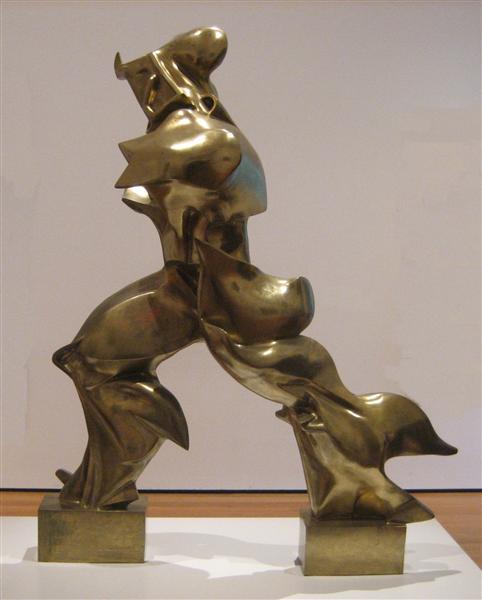

When Cubism Met an Energy Drink
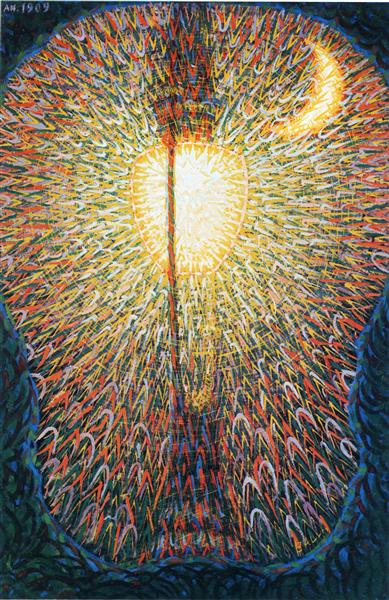
Futurism took Cubism’s fragmented approach to depicting reality and cranked it up to eleven. Artists like Umberto Boccioni, Giacomo Balla, and Gino Severini weren’t content to show multiple viewpoints of a subject. They wanted to capture the sensation of movement itself, the blur of a speeding car, the rhythmic chaos of a bustling city. Balla’s “Dynamism of a Dog on a Leash” depicts a dachshund’s legs and tail in multiple positions at once, like a glitchy GIF brought to life in 1912. These artists were trying to paint what it felt like to live in a world where technology was transforming everything faster than anyone could process. The results are wonderfully unhinged.
“We affirm that the world’s magnificence has been enriched by a new beauty: the beauty of speed.”
— Filippo Tommaso Marinetti, The Futurist Manifesto (1909)
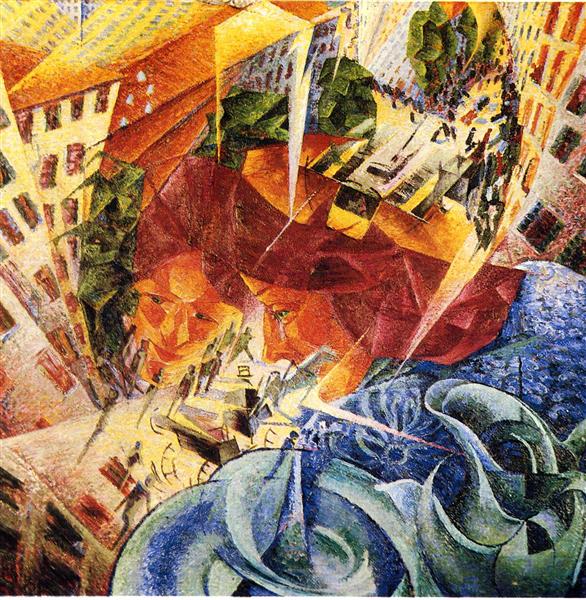

“A racing car whose hood is adorned with great pipes, like serpents of explosive breath—a roaring car that seems to ride on grapeshot—is more beautiful than the Victory of Samothrace.”
— F.T. Marinetti
The Problematic Fave Syndrome
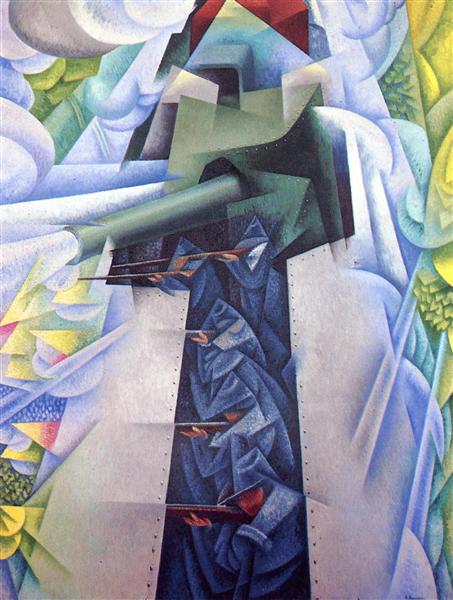
Here’s where things get uncomfortable: the Futurists’ love of aggression, nationalism, and “cleansing violence” aged about as well as milk left in the sun. Many Futurists embraced Fascism, and their glorification of war reads like a parody of toxic masculinity written by someone who’s never experienced actual conflict. Marinetti literally called war “the world’s only hygiene,” which is the kind of statement that makes you want to grab him by the shoulders and show him some history books. This is the art world’s ultimate reminder that you can create visually innovative work while holding deeply troubling political views, and that we need to grapple with that contradiction.
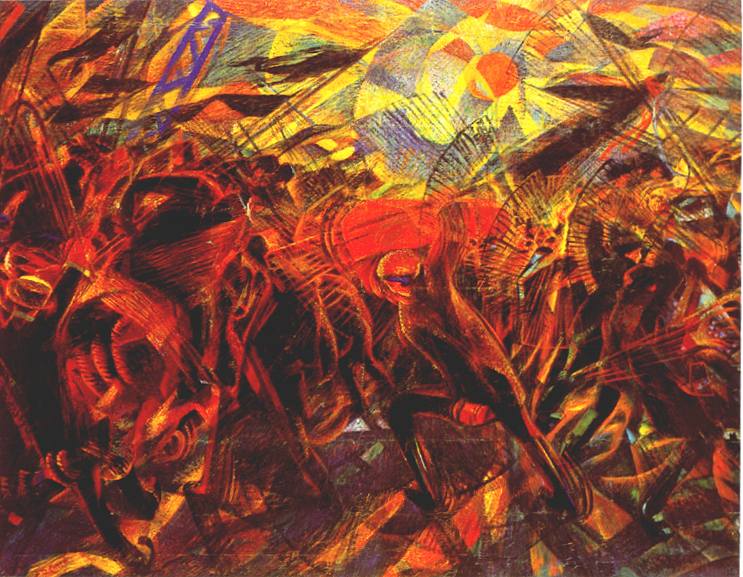
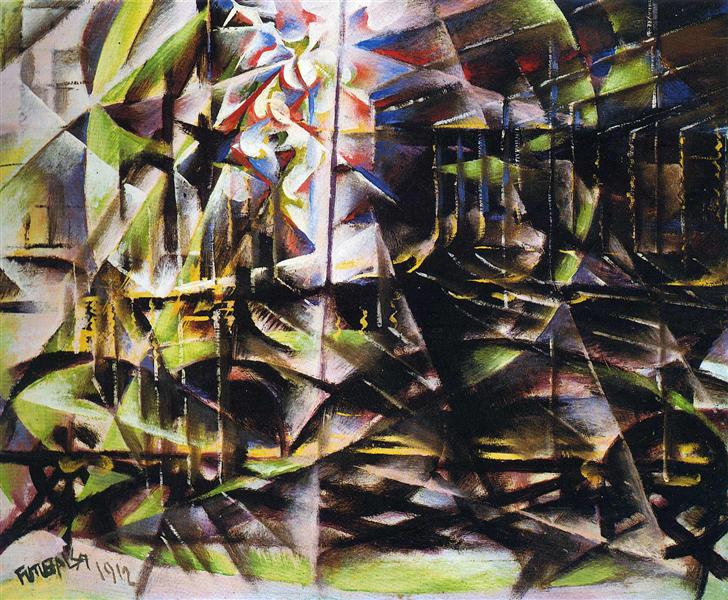
“Time and Space died yesterday. We already live in the absolute, for we have already created velocity, which is eternal and omnipresent.”
— F.T. Marinetti
Why Futurism Still Matters (Despite Everything)
Strip away the fascist baggage and questionable manifestos, and Futurism’s visual innovations remain genuinely influential. The movement’s obsession with speed, technology, and breaking from tradition predicted our current relationship with constant connectivity and rapid change. Contemporary Artists, Digital Artists, Graphic Designers, and anyone working with Motion Graphics owes a debt to these Italian speed demons. Plus, their aggressive self-promotion and manifesto-writing basically invented the modern artist’s social media strategy, just with more typewriters and fewer hashtags.
Experience the Velocity (Minus the Fascism)
Ready to explore Futurism’s wild ride through art history? Visit museums like MoMA, the Guggenheim, or Milan’s Museo del Novecento to see major Futurist works in person and feel that kinetic energy radiating off the canvas. Read the manifestos for their historical significance, but keep a critical eye. Study how contemporary artists incorporate motion and technology without nationalism. Whether you’re drawn to the visual dynamism or fascinated by movements that show us what not to do politically, Futurism offers crucial lessons about innovation, ideology, and the dangerous seduction of speed for its own sake.
Looking to explore more art genres? Head over to Joe Latimer.com for a multidisciplinary, visually stunning experience.
Enjoy this blog? Please help spread the word via: