


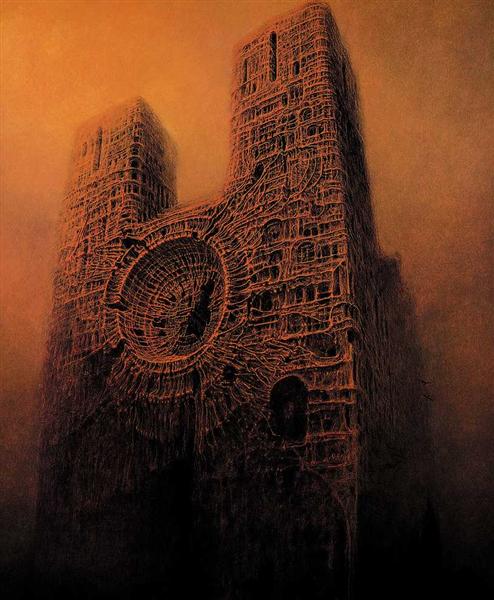
When your day job is architecture, but your soul screams apocalypse, you get Zdzisław Beksiński, who had no formal training as an artist, graduating instead with an architecture degree from the Kraków Polytechnic in 1952. But here’s the beautiful irony: while he was supposed to be designing functional buildings, his actual calling was painting worlds that looked like they’d been through several apocalypses and a really bad breakup.

His best-known period, which he called his “fantastic period” and lasted from the late 1960s into the mid-1980s, featured disturbing images of gloomy, nightmarish environments with detailed scenes of death, decay, landscapes filled with skeletons, deformed figures, and deserts. Meanwhile, the man himself? He was known to be a pleasant person who took enjoyment from conversation and had a keen sense of humor. The disconnect is absolutely delicious.

The Artist Who Refused to Explain Anything (On Purpose)
Beksiński once said, “I wish to paint in such a manner as if I were photographing dreams.” And he meant it literally. He avoided concrete analysis of the content of his work, saying, “I don’t want to say or convey anything. I just paint what comes to my mind.” This drives art critics absolutely bonkers, which honestly might have been part of the appeal for him.
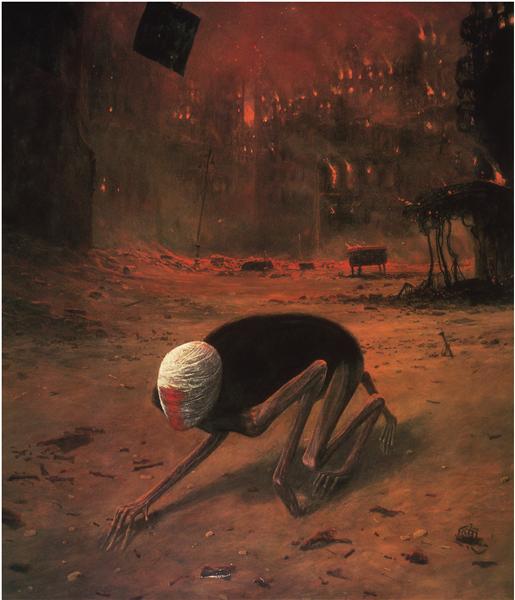
“I wish to paint in such a manner as if I were photographing dreams.”
― Zdzisław Beksiński

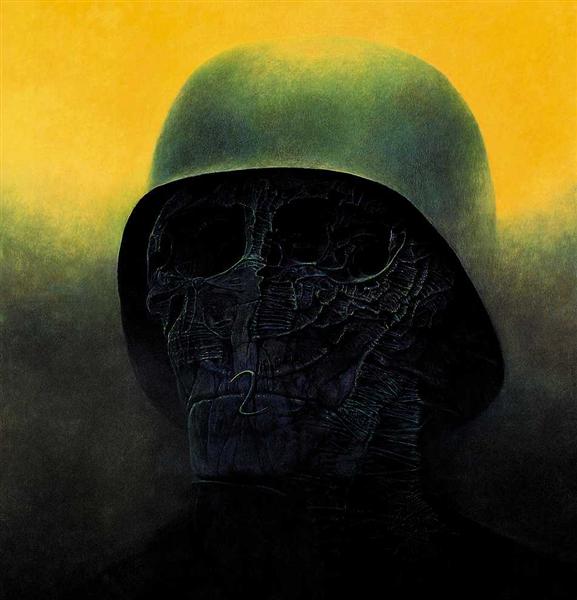
He refused to title his paintings, claimed not to visit museums or care about other artists’ work, and painted while listening to classical music (though he also appreciated rock). His ability to manipulate the effects of light became a hallmark of his work, comparable to William Turner’s renowned abilities. Imagine creating some of the most haunting imagery in contemporary art and then just shrugging when people ask what it means.

“I am obsessed with the process of creation.”
― Zdzisław Beksiński
Hollywood Called (And Borrowed His Nightmares)
Guillermo del Toro credits Beksiński as inspiration for the movie Pan’s Labyrinth, for which he won an Oscar in 2006. His work is often compared to H.R. Giger, who designed the creatures for Alien, which tells you everything about Beksiński’s aesthetic: dystopian, surreal, and magnificently unsettling. In 2016, the Historical Museum in Sanok opened a gallery with more than 600 works of Beksiński, the biggest exhibition of his artworks in the world. But here’s the twist: despite painting skeletal figures and apocalyptic wastelands, Beksiński insisted some of his works were optimistic or even humorous. That’s the kind of dark comedy only a true artist can pull off.

A Life That Mirrored His Art (Tragically)
Beksiński’s wife Zofia died in 1998, and a year later, on Christmas Eve 1999, his son Tomasz died by suicide. Beksiński discovered his son’s body. The final blow came in 2005. On February 21, 2005, Beksiński was murdered in his Warsaw apartment by 19-year-old Robert Kupiec, the son of his longtime caretaker, reportedly after Beksiński refused to lend him money. Robert was sentenced to 25 years in prison. On that final day, Beksiński wrote in his journal: “Maybe, against all odds, I’ll manage to finish the painting today.” He finished it, a painting signed “Y.” The artist who spent decades painting death met it in the most senseless way imaginable.
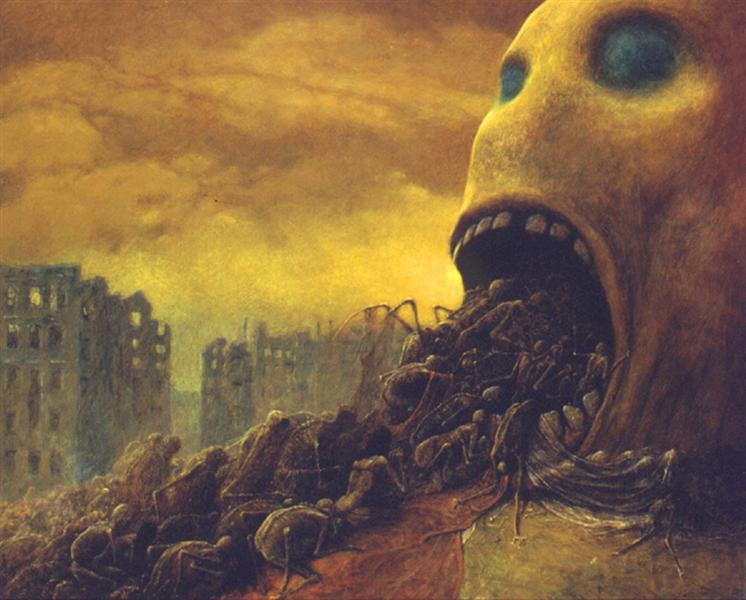
“What matters is what appears in your soul, not what your eyes see and what you can name.”
― Zdzisław Beksiński
Enter the Nightmare (Your Brain Will Thank You Later)
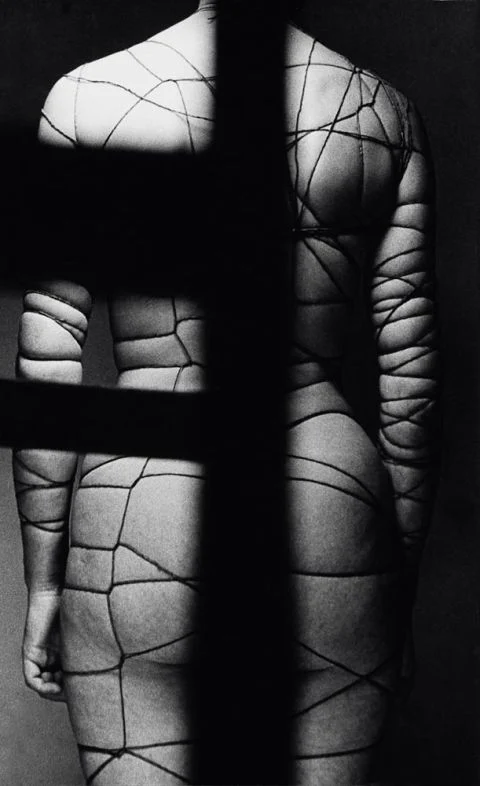
Ready to experience Beksiński’s haunting genius? Visit the Historical Museum in Sanok, Poland, which houses the world’s largest collection of his work, with over 600 pieces. Explore his paintings online and notice how his mastery of light transforms horror into something oddly beautiful.
Watch The Last Family, the 2016 film about his life, to understand the man behind the monsters. Follow contemporary artists influenced by his dystopian surrealism and see how his legacy continues to inspire dark dreamers everywhere. Whether you’re drawn to the macabre or just appreciate technically brilliant painting, Beksiński proves that beauty and nightmare aren’t opposites. They’re dance partners, and he knew all the steps.
Looking to explore more art genres? Head over to Joe Latimer.com for a multidisciplinary, visually stunning experience. ☮️♥️🎨
Enjoy this blog? Please help spread the word via: